
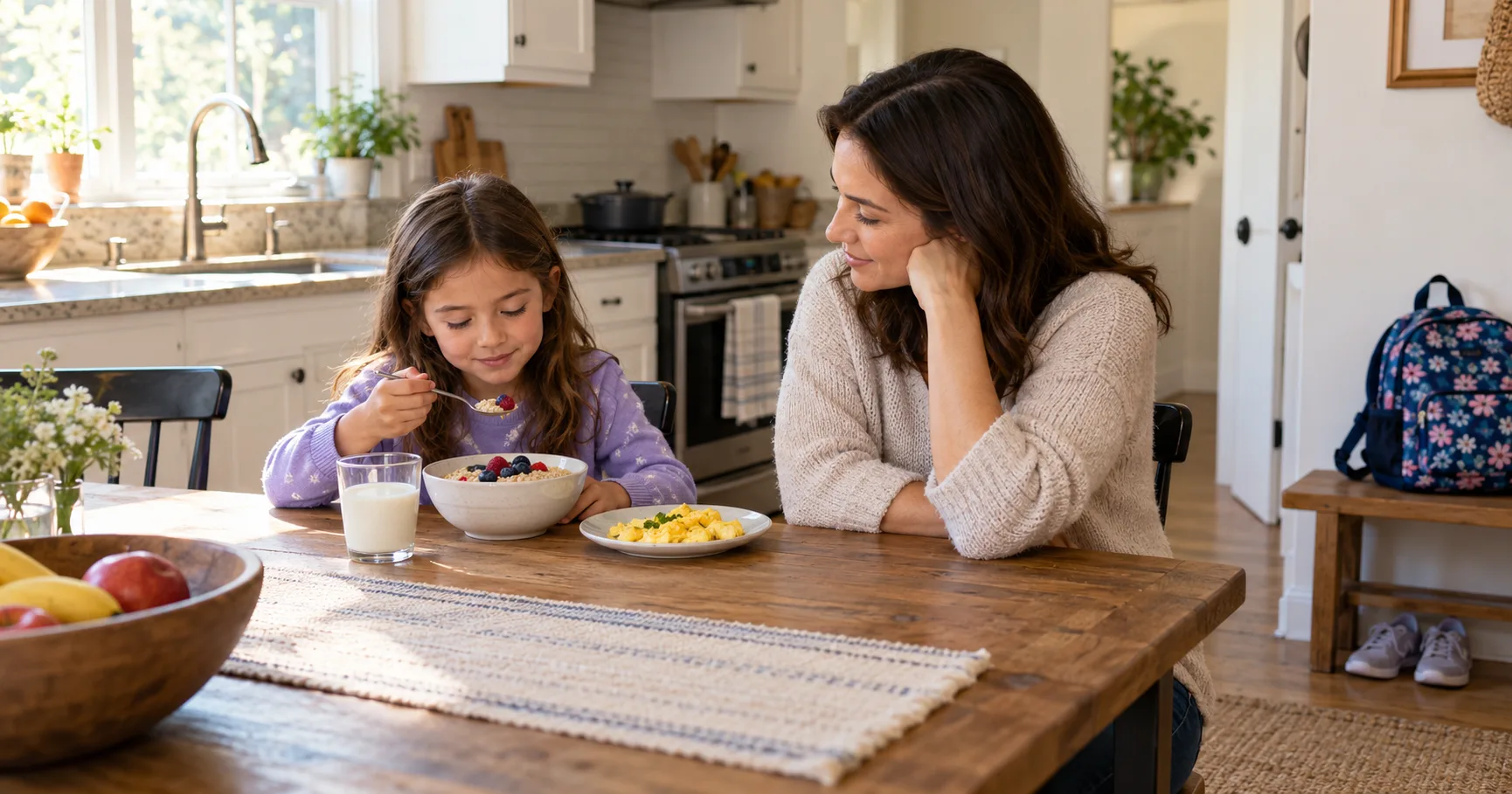
Most parents want their children to eat well, stay active, and sleep enough, yet busy weeks make consistency hard. Even so, healthy habits for kids can grow from a daily routine with familiar steps at roughly the same times.
Once your son or daughter can predict what happens after breakfast or bath time, mornings move faster and evenings bring fewer arguments. At Litill, we share practical advice on nutrition, fitness, and emotional development for families working towards calmer homes.
Below, you’ll learn why a steady rhythm lowers stress and which four parts of the day to organize first. You’ll also see how reading together and naming feelings support mental health, plus ways to win cooperation without power struggles.
Why a Predictable Daily Routine Helps Kids Build Healthy Habits
A daily routine settles everyday debates, like when to start chores or switch off the TV, since the next step is already set. Experts at the American Academy of Pediatrics (AAP) say children do best with regular, predictable, and consistent routines.
A day without surprises calms nerves and gives children a sense of control. Even leaving the playground feels easier when kids know what comes next.
Repetition brings a second payoff, because tasks with a set time each day become automatic. Many kids who brush their teeth right after breakfast for a few weeks start reaching for the toothbrush unprompted.
Of course, a schedule doesn’t need military precision. Snack time at 4:15 instead of 4:00 won’t throw anything off, since young minds track the sequence of homework, dinner, and bed. A little wiggle room keeps home life balanced between structure and freedom.
Now, let’s look at the four routines worth building first.
Healthy Habits for Kids: Four Routines to Build Into Your Family’s Day
Mornings, meals, playtime, and bedtime already happen in every home, so all four make natural anchors for healthier habits. Pick whichever part of the day feels most chaotic right now and make one small change there.
Morning Routines: How to Get Out the Door for School Without the Rush
Have you ever spent ten minutes hunting for a missing shoe while the school bus rolls past? Most parents have, and the rush often ends with a tearful drop-off (bonus points if the shoe turns up in the dog’s bed).
A set wake-up time is the first fix, since kids who rise at the same hour tend to grumble less. Prep work the night before helps, too. Lay out clothes and pack backpacks before bed, and breakfast happens at the table instead of in the car.
For younger kids, a picture checklist works well, and we’ve watched visual charts cut morning nagging in family after family. To build the chart, tape pictures of a toothbrush, a shirt, and a cereal bowl by the door.
Finished tasks become small daily wins, and confidence grows before the first bell.
What Belongs on a Growing Child’s Plate Each Day?
A child needs fruits, vegetables, whole grains, lean protein, and dairy throughout the day for good health and strong growth. USDA MyPlate guidance suggests filling half the plate with fruits and vegetables, and three eating habits bring the half-plate goal within reach at home:
- Fill Half the Plate: Berries at breakfast and green beans at lunch cover the produce side. Whole grains and a lean protein, like chicken or eggs, fill the rest. On hectic nights, frozen vegetables work just as well as fresh ones.
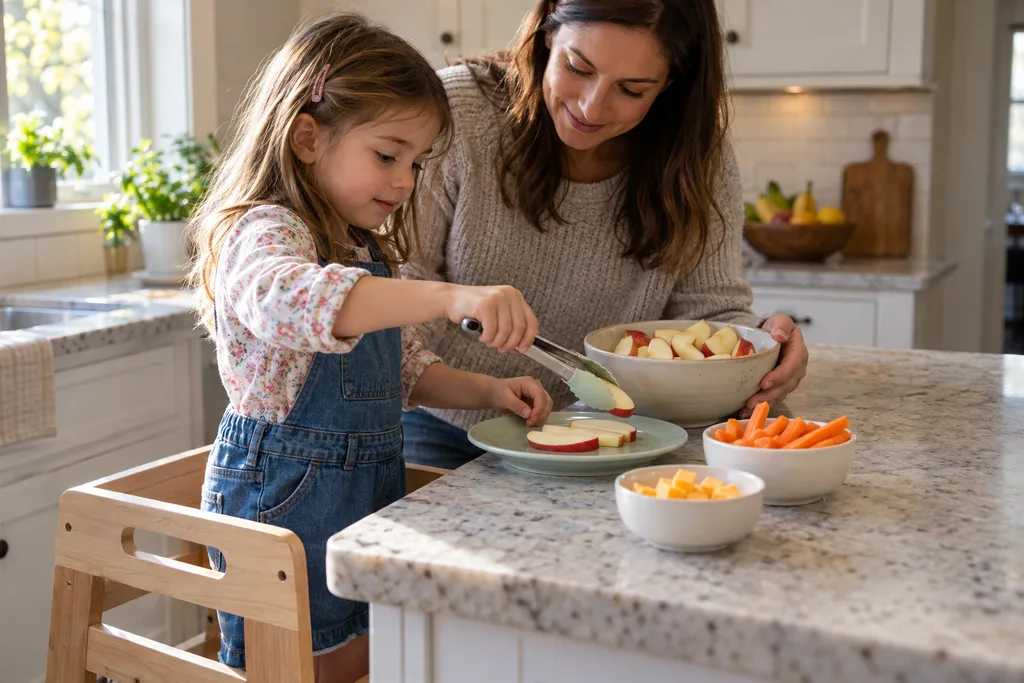
- Keep Snacks Simple: If your child comes home starving, reach for apple slices, yoghurt, or carrot sticks. You should also let them pick from a snack bin you stock every Sunday. Add a protein like cheese to keep hunger away until the next meal.
- Share Family Meals: Regular family dinners give picky eaters a low-pressure chance to try new foods. Even three shared meals a week count, so keep phones off the table. Let kids serve themselves, since choosing portions builds independence.
We all have nights when dinner is a bowl of cereal, and a single bowl won’t undo a week of balanced eating. Consistent food habits give young bodies energy for school and play.

How Much Physical Activity Do Kids Need Each Day?
The Centers for Disease Control and Prevention (CDC) recommends at least 60 minutes of activity every day for ages 6 to 17 (recess and gym class count toward the total, too). You’ll see active children build stronger bones and muscles, and their focus lasts longer during lessons.
Nobody needs a gym to hit the daily target. Tag, biking, dancing, and jumping rope all qualify, and 15-minute bursts after school or before dinner fit busy weeknights.
Once the energy burns off, evenings call for a slower pace.
A Consistent Bedtime Routine Helps Children Sleep Better
Calm, unhurried evenings give children easier nights and brighter mornings. The AAP backs sleep guidelines of 9 to 12 hours each night for ages 6 to 12.
For a 7-year-old, a school-night lineup could look like the table below:
| Time | Step |
| 7:00 p.m. | Bath and pajamas |
| 7:20 p.m. | Brush teeth |
| 7:30 p.m. | Dim lights and cuddle time |
| 7:45 p.m. | Lights out |
Shift the times to fit your family, but keep the order the same. The whole lineup takes about 45 minutes and keeps school nights predictable.
Screens also need an earlier cutoff, since device light can harm sleep. Switch devices off an hour before lights out (a short night often means a cranky, teary next day).
Expect some pushback during the first week, as many kids test a new bedtime before accepting the change. At Litill, we share calm wind-down ideas for parents who dread the evening standoff.
Sleep covers the physical side, but emotions need attention too.

Can Reading and Talking About Feelings Support Your Child’s Mental Health?
Yes, shared reading and open talks about feelings support your child’s mental health by giving kids words for emotions.
Problems with mood and behavior can start early in childhood, and CDC data backs up the concern. About one in five children ages 3 to 17 have received a mental, emotional, or behavioral health diagnosis at some point.
Regular conversations at home help young minds work through tough emotions. Parents often tell us kids who can put feelings into words share worries at dinner instead of lying awake at 10 p.m. According to the Child Mind Institute, a strong emotional vocabulary helps children feel more in control.
Three small habits help kids practice emotional words at home:
- Read Together Daily: Just 10 minutes of reading after school builds vocabulary and a longer attention span. A self-chosen book keeps story time fun. Ask a question about the story afterward to check understanding.
- Name Big Feelings: When your child slams a door, calmly say, “You seem frustrated.” Model the habit with your own moods, like “I feel worried about work.” Over time, children start labeling their own emotions unprompted.
- Make Time to Talk: Car rides and the walk home work well for a short chat. Ask about the funniest or most surprising moment of the day, since specific prompts get longer answers than a general check-in. Side-by-side moments feel less intense than face-to-face talks for many kids.
Frequent talks feed your child’s emotional development long after each conversation ends. Still, if anxiety or sadness lasts for weeks or affects school, call your pediatrician’s office for advice.
How to Get Kids to Follow New Routines Without Power Struggles
Kids resist rules they had no part in making, so a little shared control goes a long way. The three strategies below keep cooperation high and arguments low:
| Tip | How to Try It | The Payoff |
| Offer Two Choices | Ask, “Red pajamas or blue?” | Kids feel in charge, so resistance drops. |
| Change Things Gradually | Add a new task once the current habits feel easy. | Small shifts stick faster. |
| Praise the Effort | Say, “You got dressed on your own!” | Specific praise builds motivation to try again. |
Together, the three tips give kids a real stake in the plan. Let your child help set the order of evening steps, and you’ll likely hear fewer “I don’t want to” protests. If the plan slips during a busy week, return to your usual routine the next day without a lecture.
With your child on board, the next step is choosing where to begin.
Start One Small Habit Tonight to Support Your Child’s Well-Being
Your child’s well-being rests on ordinary moments you repeat, like a shared breakfast or a goodnight hug. No family needs perfect days, since regular effort keeps healthy habits going over time.
Schedules also need updates as kids get older. A 5-year-old’s 7:30 bedtime will shift later during the teen years, and simple chores can grow into packing lunches or doing laundry. Check in with your child every few months to decide which steps still fit.
So choose a single routine from our guide and start tonight. Once the first habit feels easy, add a second, and each new routine will come more easily.