Easy science activities for kids start with things you already own. Baking soda volcanoes, lava lamps, and walking water rainbows all work on a kitchen table. With just a few household supplies and under ten minutes of preparation, you can get your kids experimenting without much planning.
Still, many parents skip these because online experiments look like full science projects with special supplies. Our Litill team believes the best kitchen science experiments start with whatever already sits in your cupboard tonight.
To help you put that idea into practice, this article covers:
- Three science activities that work for kids
- Why they help your child
- How to stretch them by age
Grab a cup of vinegar and let’s start.
Easy Science Activities for Kids: Experiments at Home
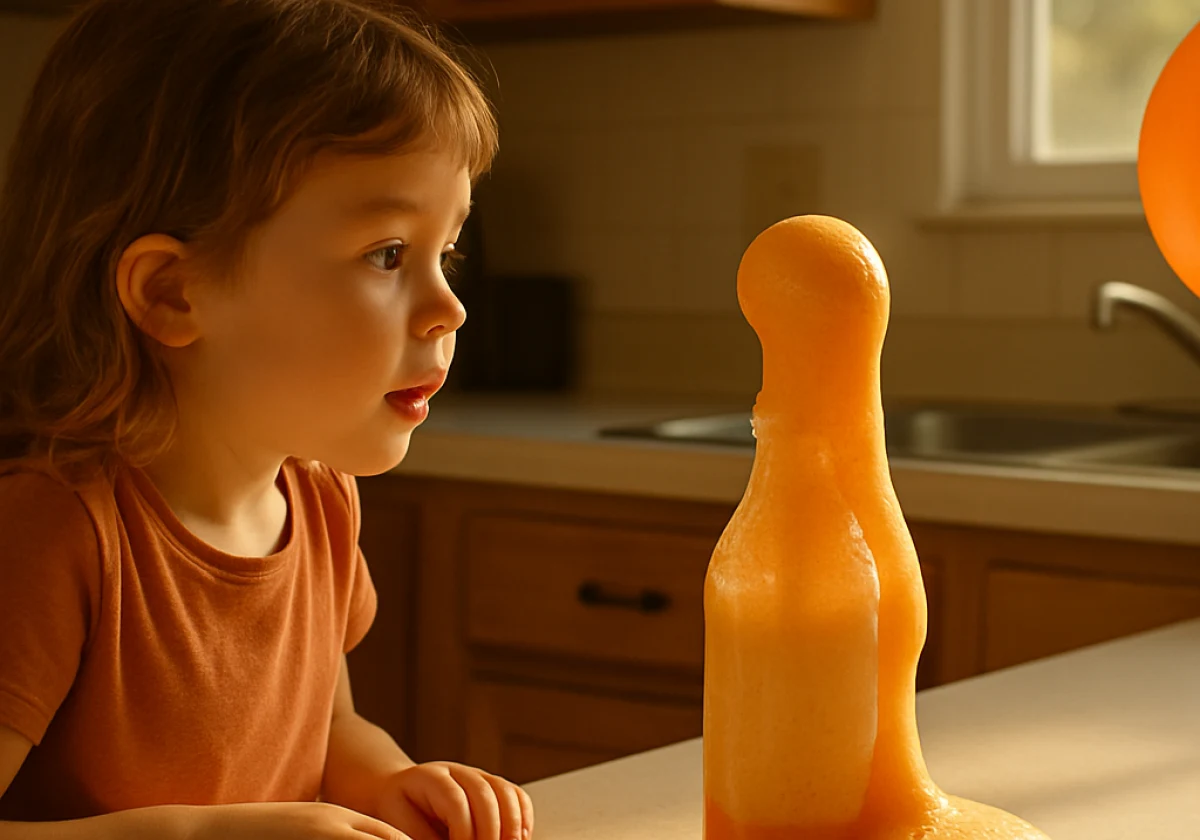
Most kitchen cabinets already hold everything you need for a week of experiments with your kids. Simple ingredients like baking soda, oil, and food coloring can help children explore chemical reactions, liquid density, and color mixing through hands-on activities.
Try these three experiments below in any order, since no science activity here depends on the one before it.
What Fun Science Experiments Use Baking Soda and Vinegar?
Baking soda and vinegar give you three things from one reaction:
- A volcano
- A self-inflating balloon
- A candle snuffer
When you mix baking soda and vinegar, they react and release carbon dioxide gas. And what happens next depends on how you collect or direct that gas.
In a homemade volcano, the reaction creates bubbles that push colored foam out of the bottle. If you stretch a balloon over the opening, the gas collects inside and inflates it. You can also collect the gas and carefully pour it over a candle flame to extinguish it (with adult supervision).
Once your child understands the reaction, encourage them to change the amounts of baking soda and vinegar. First, ask them to predict what will happen, then observe the results, and write down what they notice. This helps them practise making predictions and testing ideas through a simple science experiment.
A Lava Lamp Science Project From Pantry Staples
Fill a jar two-thirds with vegetable oil. Then add water and a few drops of food coloring before dropping in half an antacid tablet.
As the ingredients settle, you’ll notice the colored water sinking below the oil because water is denser. As a result, the jar forms two separate layers, and the antacid tablet produces gas bubbles that carry blobs of colored water upward for roughly a minute.
When the bubbling slows, drop in another piece of the tablet to keep the experiment going. Children can watch the colors rise and fall, then try different amounts of the tablet to see how the bubbling changes.
Walking Water Rainbow: Hands-On Activities With Paper Towels
For the walking water rainbow, line up seven paper cups. Then, fill the first, third, fifth, and seventh cups with water, using red, yellow, blue, and red food coloring respectively. Leave the other cups empty, then connect each pair of neighbouring cups with folded paper towels.
Once the paper towels touch the water, you’ll see it slowly travel into the empty cups. This process is called capillary action, which allows water to move through the paper fibres against gravity. As the colored water meets, new colors begin to appear.
We recommend setting this experiment up before dinner so your kids can watch the mixing happen while they eat (slow science still beats no science on a busy weeknight).
How Do STEM Projects Support Child Development?
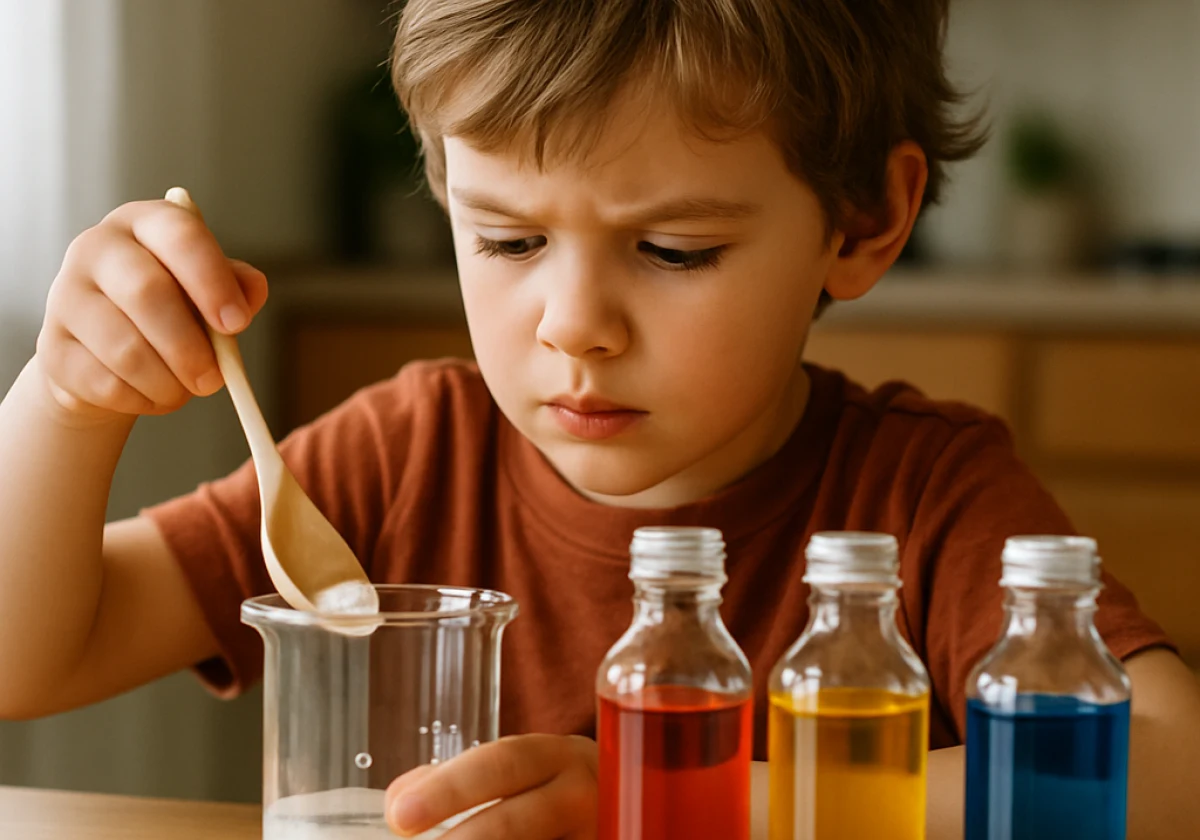
STEM projects support child development by building problem-solving skills, curiosity, and early math thinking. For context, STEM stands for science, technology, engineering, and math.
These four subjects often work together during simple experiments. For example, when children predict what will happen, measure ingredients, and compare results, they practise several STEM skills at once. And that skill payoff lasts, since US STEM employment has grown 79% since 1990.
The gains below land hardest when you let your child run the steps instead of doing them yourself.
- Problem-Solving Skills: Your child predicts an outcome, watches it flop, then changes one thing. That loop teaches the scientific method without a worksheet.
- Early Math Thinking: Measuring ingredients helps children understand quantities and practise counting. They can compare how much they used in each attempt and observe how different amounts affect the results.
- Lasting Curiosity: When children ask why the balloon inflated, they begin exploring how things work. Encouraging these questions can help them develop an interest in science that continues as they grow.
Pick the gain you care about most and chase it with follow-up questions. Even two minutes of talking through results beats rushing into a second experiment.
Making Home Science Experiments Part of Your Family Routine
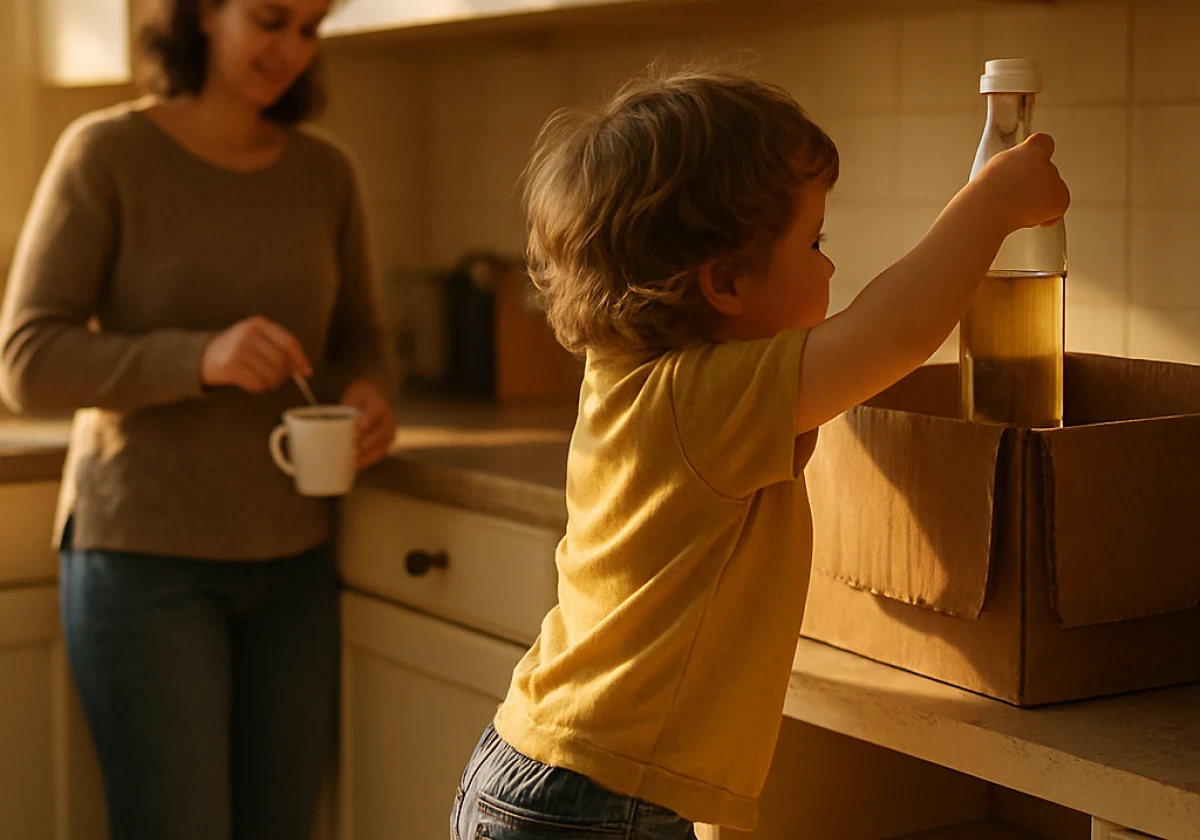
Home science experiments encourage children to keep asking questions long after they’ve cleaned up the experimental space. For example, a Saturday volcano becomes Tuesday’s question about why bread rises, and you get to answer it together. We’ve watched that pattern hold in families who run one easy science experiment a week and nothing more.
So pick a fixed slot for an experiment rather than waiting on a free afternoon that never arrives. In this case, Sunday after breakfast works well, because the kitchen is already a mess and cleanup folds into it anyway. You can even keep a shoebox of supplies (e.g., vinegar, oil, coloring, paper towels, and a cheap funnel), where your child can reach it alone and start analyzing themselves.
Once you’ve established a routine, encourage your child to experiment without worrying about getting perfect results. If something doesn’t work, ask what changed and what they could try differently next time. These conversations help children learn through trial and error.
You might also want to share their experiments with other parents. Before posting photos in a parent group, check its privacy settings and how the platform handles uploaded images.
Science for Kids: One Experiment, Every Age
You can adapt the same science experiment for children of different ages by changing the tasks and questions you give them. Preschoolers can focus on pouring, mixing, and observing colors, while older children can measure ingredients, predict results, and explain what happens.
The table below shows how to adjust these activities to suit your child’s age and learning abilities.
| Age | What they do | What they learn |
|---|---|---|
| 3 to 5 | Pour, stir, and watch | Colors, counting, cause and effect |
| 6 to 8 | Predict, then record the result | Simple testing, fair comparison |
| 9 to 12 | Change one variable and chart it | The science behind the reaction |
Bottom Line: Older kids will happily run the whole thing for a younger sibling, and teaching it back proves they understood it. We’ve seen that one move save parents an entire afternoon.
Start Your First Easy Science Experiment for Kids Tonight
Home science needs no kit, lab coat, or free weekend on the calendar. One cup of vinegar and ten minutes of your attention cover the whole thing, start to finish.
Choose the volcano tonight and hand your child the pouring job. You’ll know inside a minute whether you’ve started something worth repeating every week.
Ready to build a weekly science habit at home? Explore Litill for more experiment ideas, kitchen science guides, and activity plans you can use today.