

The habits children build in their earliest years lay the groundwork for how a child thinks, feels, and grows well into adulthood. Most parents don’t notice it in the moment, but early childhood development habits are developed through everyday routines like meals, bedtime, and simple conversations.
Research consistently shows that a child’s development is most rapid before age five. At that time, the brain absorbs everything, and the experiences children have during this window leave a lasting impression on their health, behaviour, and relationships.
This article walks you through what those habits look like, why they’re important, and how you, as a parent, can start building them today.
Early Childhood Development Habits: Why the First Years Set the Foundation
Early childhood is when the brain is at its most receptive. Research from Harvard University confirms that more than one million neural connections form every second in a baby’s first few years.
Families who understand this early tend to approach daily routines very differently. They see bath time, grocery runs, and bedtime stories as development in action. The support parents offer during early childhood doesn’t have to be elaborate. It just has to be consistent.
Here’s a closer look at two of the most important pieces of this puzzle.
What Developmental Milestones Tell You About Your Child
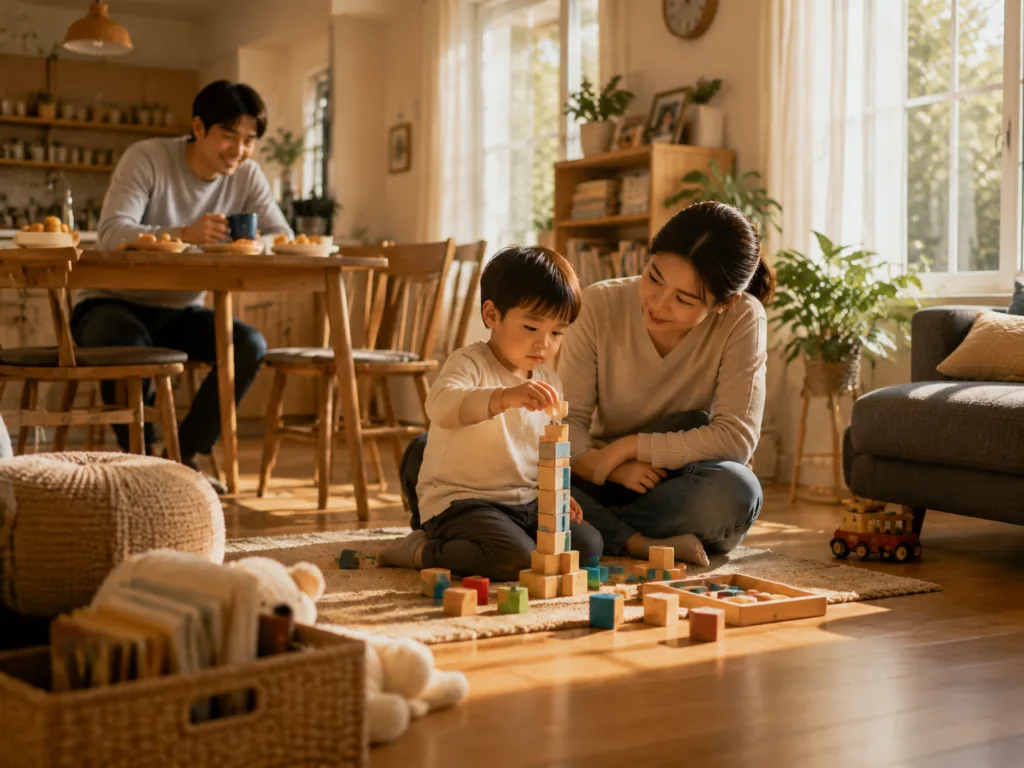
Developmental milestones give parents a reliable way to track how a child’s development is progressing. Think of them as a general guide rather than a strict deadline. They track progress in areas such as movement, communication, and learning.
Every child moves at their own pace, and that’s completely normal. One child might hit a milestone two months early while another takes a little longer. Neither outcome says anything definitive about their long-term skills.
That said, if development seems significantly behind in areas like speech or motor skills, bring it up with a pediatrician. Catching delays at the right age gives children access to support when it can have the greatest impact.
The Critical Windows in a Child’s Development
Not all stages of childhood carry equal developmental weight. The early years, particularly from birth through age five, are when the brain builds its most foundational connections. This is the prime window for language development, physical development, and early social bonding.
During these years, children grow at a pace they will never quite match again. They absorb language from conversations around them and slowly begin to assert independence. Honestly, a child’s ability to reason and problem-solve starts reforming right here.
Both genetics and environment play a part in how children move through this window. According to the Centers for Disease Control and Prevention (CDC), in its “Learn the Signs. Act Early.” programme, approximately 1 in 6 children has a developmental delay, disorder, or disability.
Parenting Styles and How They Influence Healthy Development
The way parents show up every day directly affects how children develop emotionally and socially. Parenting styles significantly influence a child’s development in ways that stretch well into adulthood.
An understanding of child development provides valuable context for these outcomes.
Authoritarian Parenting vs. Authoritative Parenting: What’s the Real Difference?
Authoritarian parenting focuses on strict rules and obedience, while authoritative parenting combines clear expectations with guidance and support.
The table below outlines the main differences between the two styles.
| Authoritarian Parenting | Authoritative Parenting | |
| Rules | Strict parental rules, no flexibility | Clear boundaries with room to breathe |
| Communication | One-way, top-down | Open communication, two-way |
| Child’s Role | Obey without question | Make your own decisions within limits |
| Outcome | Lower self-esteem, higher anxiety | Higher self-esteem, stronger skills |
Therefore, it’s clear that these two parenting styles sound nearly identical, but produce very different outcomes in children.
How Emotional Development and Mental Health Connect Early On

A child’s emotional development refers to how they learn to recognize, express, and manage their feelings. It starts forming well before school, right inside the family unit. The family context in which a child grows up plays a significant role in how their emotional well-being takes root.
Children raised in warm, responsive homes build stronger emotional regulation over time through healthy routines. As a result, they handle frustration better and develop healthier social relationships with peers.
Keep in Mind: A child’s home environment doesn’t need to be perfect to support good development. Open communication and predictable routines are often enough.
Building Healthy Habits That Help Children Thrive
Helping children grow starts with small, repeatable habits that fit naturally into your family’s daily life. Simple, consistent practices at home have a significant role in supporting strong developmental outcomes in young children.
Parents who model calm, structured behaviour give their children a powerful blueprint for their own habits. That said, no family gets it right every single day, and that’s completely fine. Parenting is best viewed over time rather than through isolated moments.
A look at two practical areas where healthy habits make a huge difference.
Turning Everyday Moments Into a Learning Opportunity
You don’t need a classroom or a curriculum for your child to learn something meaningful. Some of the best learning opportunities happen in the most ordinary places. For example, time spent together in the kitchen, the backyard, or even the grocery store can have a lasting impact on a child’s development.
Asking children questions during daily tasks builds curiosity and early communication skills. It also encourages problem-solving skills without turning the moment into a lesson. Everyday activities then become powerful opportunities for learning through play.
After all, children learn best through experience, and hands-on involvement in everyday life supports faster, deeper development. Encouraging them to stir the batter, sort the laundry, or water the plants helps make simple routines part of meaningful learning moments.
Small moments of independence add up to real growth in a child’s ability to think and act on their own.
Healthy Habits at Home: How Daily Routines Support Early Development

The habits children build at home in their early years lay the groundwork for their physical and emotional well-being. Many aspects of early development are supported through everyday routines at home.
These are four habits worth building early:
- Consistent Sleep Patterns: Good sleep supports brain development, mood stability, and emotional regulation in young children. A predictable bedtime routine gives children a sense of security, which can make falling asleep and staying asleep much easier.
- Proper Nutrition: The foods children eat each day play a direct role in their growth, concentration, and energy levels. Balanced meals and snacks provide the vitamins, minerals, and nutrients their developing bodies and brains rely on.
- Physical Activity and Play: Running, climbing, dancing, and active play help children build strength, coordination, and motor skills. Through play, they also learn how to cooperate with others, solve problems, and handle different social situations.
- Limited Screen Time: Setting reasonable limits on screens can support healthy sleep habits and attention spans. Extra time away from devices often creates more opportunities for conversation, creative play, reading, and hands-on learning.
A child’s home environment sets the tone for all of these habits. Other caregivers and family members play a part, too, so keeping routines consistent across the family unit helps children manage expectations more easily.
Just as importantly, Healthy habits built in the early years give kids a strong foundation that carries well into later childhood and beyond.
Your Child’s Future Is Being Built Right Now
Every intentional habit you build with your child today is an investment in their future. Children learn and grow through everyday experiences, and consistent routines with responsive caregiving provide a stable environment for healthy development.
Healthy development develops gradually through regular support and engagement from parents. A child’s future is being formed right now, in the routines, conversations, and moments you might not even think twice about.
Start where you are. Use the resources available to you and lean on other caregivers when you need support. Litill can help you take the next step with more confidence, because your child’s growth is not something you have to handle alone.