

Building independence in children starts with everyday tasks like getting dressed, setting the table, and packing their own school bag. Each small job gives your child real control over the morning. That hands-on control teaches responsibility in a way a lecture rarely can.
Many parents step in too quickly, though, especially on rushed mornings. Tying the shoes yourself feels faster when the clock is running. At Litill, we often see loving parents who want to help end up doing tasks their child could manage.
This guide covers which tasks to hand over, when to start each one, and how to keep the habit going at home. Start with the reason everyday chores work so well.
Why Does Teaching Independence to Children Start With Everyday Tasks?

Everyday tasks build independence because they give children small daily chances to practice and real proof they can cope alone. Chores your child already watches you do each day make the easiest starting point, since the steps feel familiar.
Parents widely share this goal. In a Pew Research survey, 93% of Americans said teaching children to be responsible is especially important. Responsibility and independence grow together through daily practice.
The three sections below show what changes for your child once you stop doing the task for them.
How Everyday Tasks Support Child Development
Everyday tasks support child development by turning lessons into physical actions. Young children often learn best by using their hands and moving their bodies. Buttoning a coat, for example, trains fine motor control. Sorting laundry by color practises matching and grouping, both early skills that later support reading and maths.
The household tasks you already do each morning double as learning opportunities your child can use. Your child’s skills grow there without anyone calling it a lesson.
Chores That Build Confidence and Decision-Making Skills
Chores that stretch a child just slightly past their current ability tend to build confidence quickly. The proof of success sits right there on the table.
We once watched a seven-year-old spend four minutes working out how to carry a full water jug. Nobody coached her, and she solved it by taking slower steps. Tasks with a visible result work the same way. Making a sandwich, watering a pot plant, or folding a towel all end with something the child can point to and say they finished.
Simply put, the lesson sticks because she owned both the problem and the fix.
Why Stepping Back Helps Your Child Grow
Struggle is part of learning, and a quick rescue removes it before your child can solve anything. A quick rescue removes that struggle before your child can solve anything. Supporting your child means staying close without taking over.
In practice, that often means sitting on your hands for an extra 90 seconds while they try again. If you’re like the parents we talk with each week, those seconds will feel long. Your child, however, will read your patience as trust.
Building Routines That Encourage Independence
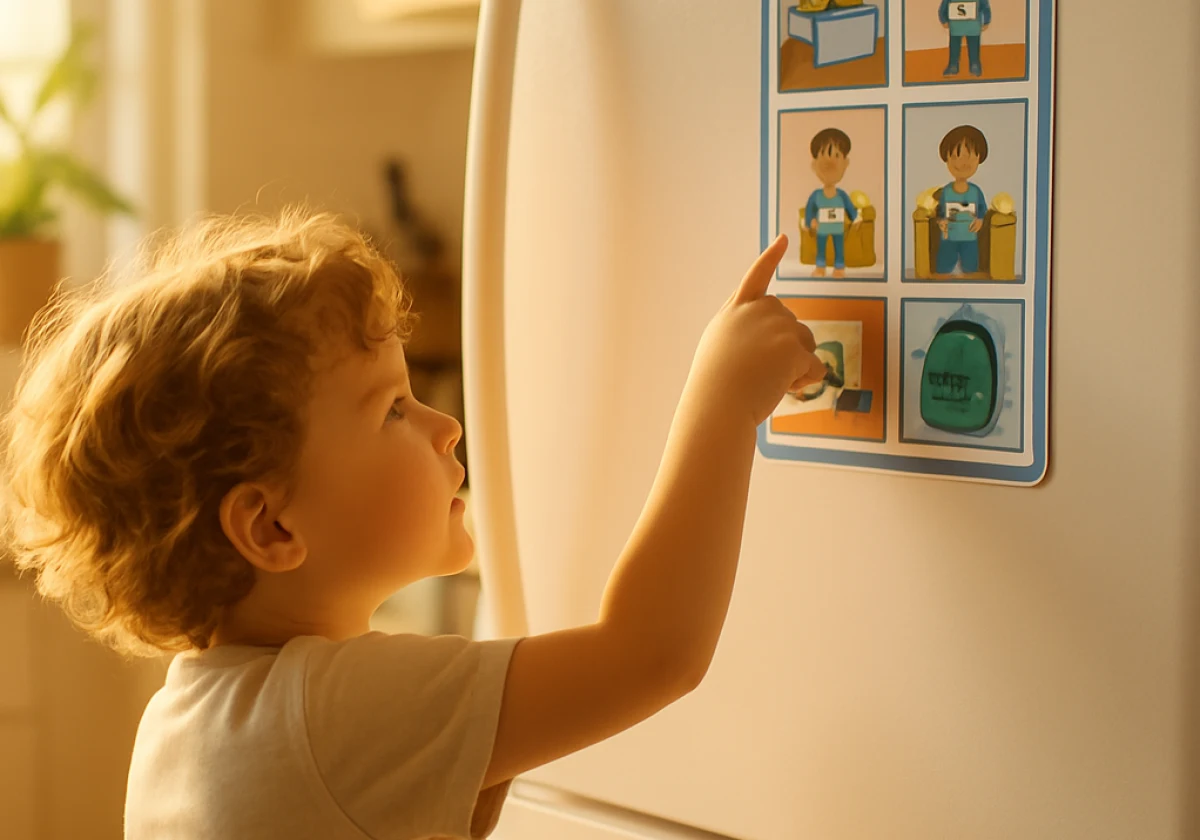
Steady routines help kids finish tasks without constant reminders from you. When each step happens in the same order every day, the routine itself becomes the prompt. That frees you from repeating yourself every single morning before school.
The four habits below give your child a rhythm they can follow on their own.
- Same Order Every Morning: Keep the sequence fixed: wake, dress, eat breakfast, pack the bag. Many children can follow it from memory within a couple of weeks. If the order changes day to day, your child has to ask what comes next instead of moving through the steps on their own.
- Visual Checklists: A photo chart on the fridge works better than spoken instructions for children who cannot read yet. Ticking off each picture gives them a clear sense of progress. You can photograph each step with your phone and print them on a single sheet, or use a free template from a parenting site.
- Extra 10 Minutes: Build 10 spare minutes into your morning before school. Time pressure is the most common reason parents take over, so extra room lets your child finish at their own pace. Set your alarm earlier for one week and see whether the morning changes.
- One New Task Weekly: Add one new daily living skill each week instead of handing over five jobs at once. Let each task settle before you introduce the next one. For example, week one might be packing the school bag, week two could add setting the breakfast table, and week three could add choosing clothes the night before.
Keep the routine unchanged for three full weeks before you judge it. Pushback usually fades around week two, and by week three many children run the morning with little help.
Age-Appropriate Kids Skills: What Children Can Take On at Each Stage

Many parents wait longer than they need to before handing a task over. Age ranges give you a useful starting point. Still, some children are ready earlier, and others need a little more time. Your child’s current skills tell you more than their age does.
Compare the stages below with what your child already tries to do alone. Then pick one new job that stretches them a little further.
| Stage | Tasks They Can Own |
|---|---|
| Toddlers (2 to 3) | Put toys in a bin, and carry a cup to the sink |
| Preschoolers (4 to 5) | Get dressed, set the table, feed a pet |
| Ages 6 to 9 | Pack a school bag, make a snack, sort laundry |
| Ages 10 and up | Cook simple meals, track a schedule, handle money |
These stages broadly match chore guidance from the American Academy of Pediatrics. Treat them as a guide rather than a strict rule, since readiness varies from child to child. If your child shows interest early, let them try. Children rarely pick up new tasks without guidance, so show each step before you hand it over.
Parenting Tips That Help Independence Stick at Home
Now that you know which tasks suit each age, a few habits will help the progress stick.
Start by giving your child real choices, even when the choice carries a small cost. Clothes that clash are a good example. Small, safe choices like this build independence through experience. Your child learns from the result instead of arguing about the same rule every week.
The way you respond to mistakes affects whether your child tries again tomorrow or hands the job back. So, try saying “try it again” instead of “here, let me.” In the families we talk with, spills tend to drop once parents make that switch. Calm, steady support also helps children stay confident while their skills catch up.
Afterwards, set up your home to help as well. A coat hook at child height lets your child hang up their coat without asking for help. Low shelves, a step stool at the sink, and snacks within reach work the same way. Each one removes a reason to call you over. Children take on more when the house fits their size.
Start Small and Let Them Try
Independence grows from ordinary moments, not big talks. Every task you hand over gives your child one more chance to practice. Over time, those small chances add up to real confidence and skill. Regular practice will teach them more than repeated reminders.
Pick one job this week, step back, and let the first few attempts be messy. Every task you hand over gives your child one more reason to trust their own hands.
Litill offers practical guidance for parents raising capable, confident children at home. Contact us for support that suits your child’s stage. Ready to start small? Reach out to the Litill team today.