
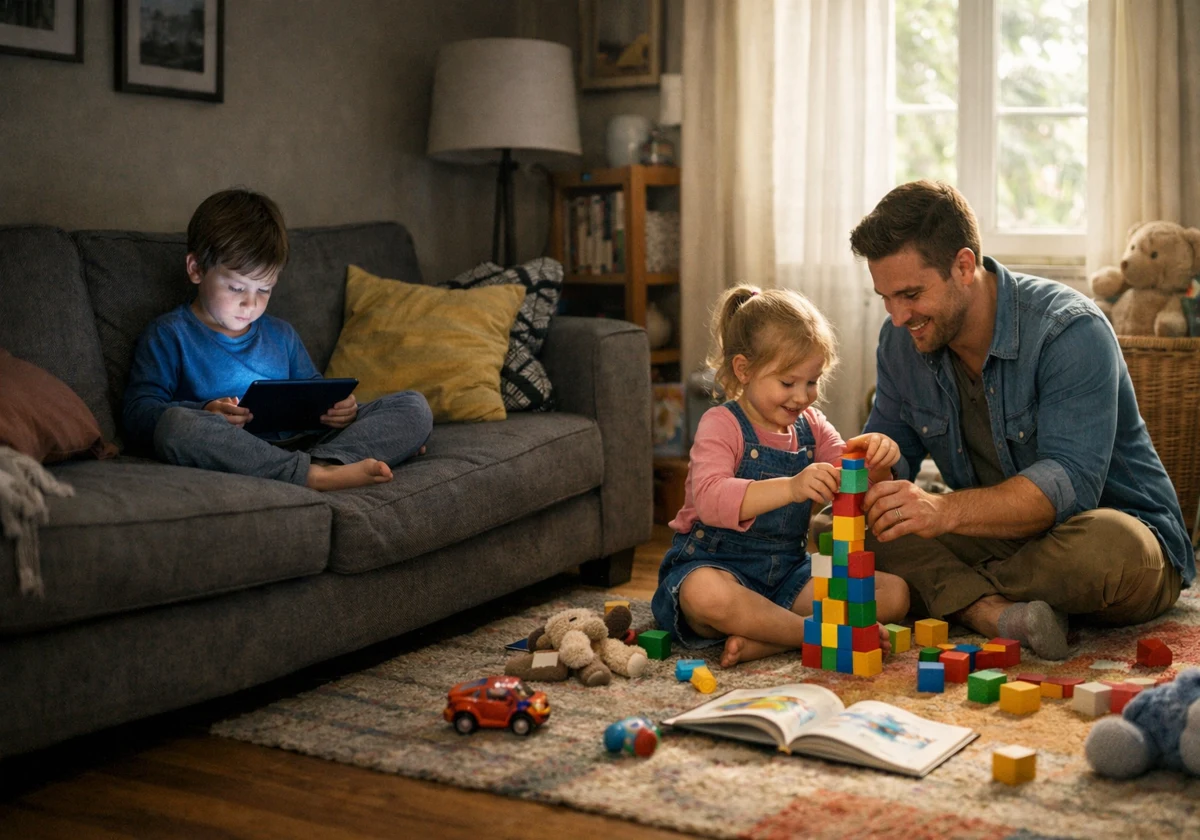
Kids need both screen time and real-world interaction, but face-to-face connection is what truly builds healthy development. Most parents already know that too much screen time isn’t great. But knowing that and doing something about it are two very different things.
Screens are everywhere now. As a result, kids interact with tablets, phones, TV screens, and computers from a very young age. And with so much media around them, the balance between digital time and real human connection deserves more attention than most families give it.
In this article, you’ll learn how screen time affects children’s development, what real-world interaction does for kids, and how to build a screen routine your family can stick to.
Keep reading, this will help you make better decisions for your child.
Excessive Screen Time Effects on Children: The Full Picture
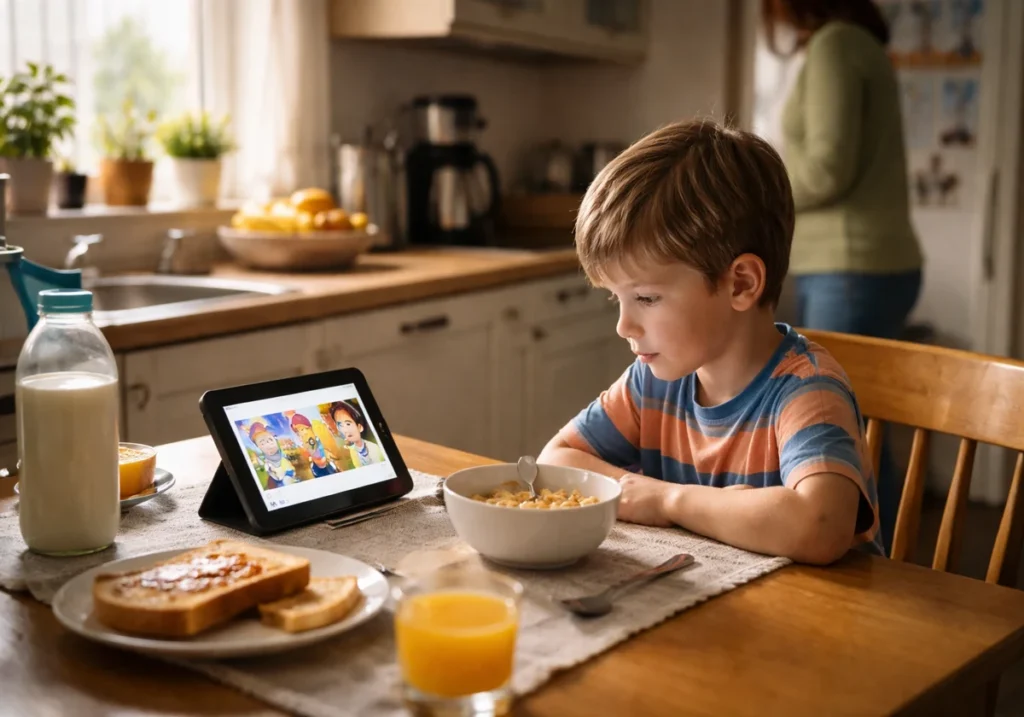
Most parents track how long their kids are on screens, but very few know what’s really happening inside their brains during that time. Researchers continue to study this topic, and the findings are hard to ignore.
According to Oxford Academic Research, screen use affects children differently depending on their age, how much time they spend watching, and what type of media they consume. Younger children are especially vulnerable here because their brains are still developing fast.
Before you set any rules at home, you should look at the two main areas that screen affects the most:
Too Much Screen Time and the Brain: What’s Really Happening
Excessive screen time floods a child’s brain with constant stimulation. Over time, this makes it harder for kids to focus on slower, real-world activities like reading or outdoor play.
Dopamine spikes from screen rewards are a big part of this. When kids get used to fast rewards from screens, everyday tasks start to feel boring and unrewarding by comparison. In fact, heavy screen use during early development can affect memory formation and emotional regulation too (and yes, that includes toddlers glued to YouTube before breakfast).
Excessive Screen Use Changes Behavior Over Time
Kids with high screen time often become irritable, impatient, and resistant when devices are taken away.
Passive screen consumption also replaces active play. This means kids miss out on physical development and creative thinking during some of their most important growing years. Plus, spending too much time in front of a screen can lead to behavioral problems, poor sleep, anxiety, and even depression in some children.
Over months, excessive screen habits gradually change how kids respond to frustration and boredom, too.
Real-World Interaction and Why Kids Still Need It
Kids still need real-world interaction because it builds emotional, social, and communication skills that screens simply can’t replace. And no matter how much technology use grows, that fact isn’t going to change.
Think about how young children learn. They pick up language, read facial expressions, and develop social skills through direct contact with family, friends, and other children around them. Younger children especially need this kind of back-and-forth engagement to grow well.
The following areas show just how much real-life connection does for kids, in ways no screen ever could.
Social Skills That Screen Time Simply Can’t Teach
Reading facial expressions and responding to tone are skills kids only learn through real conversation. No app or educational program comes close to replicating that.
For instance, group play teaches turn-taking, conflict resolution, and empathy. Think about the last time your kid worked through a disagreement on the playground. That’s real social learning happening in real time, with other children, face to face.
Kids who engage with peers regularly tend to handle relationships more confidently and kindly, too. In practice, spending time with friends, from school to the park, or just around the neighborhood, builds people skills no tablet can teach.
How Face-to-Face Time Supports Kids’ Mental Health
Children who spend a huge amount of time with people report lower levels of anxiety and loneliness overall. It’s because real-world connections give kids a felt sense of emotional support and safety.
On top of that, shared laughter, physical touch, and eye contact release bonding hormones that screens can’t replicate. A hug from grandma does more for a kid’s nervous system than an hour of Minecraft ever could. Beyond that, real connection plays a huge role in language development and a child’s ability to express feelings in healthy ways.
Bottom line: Real-life relationships within the family and outside of it are what support long-term mental health development and well-being in kids.

Screen Time and Social Media: The Well-Being Connection
Social media usually feels harmless at first, but its effects on kids’ well-being run a lot deeper. And for older children and teenagers, the risks are even more serious.
After looking closely at how kids interact with platforms like TikTok and Instagram, the findings are consistent across studies. The more hours a day kids spend scrolling, the more their mental health takes a hit.
Here’s what the research shows about kids and social media use:
- Unrealistic Comparisons: Social media floods kids with filtered images and highlight reels all day. For younger children and older children alike, these reels slowly remove their self-worth over time.
- Chronic Stress From Notifications: Constant alerts and scrolling keep young minds locked in a low-grade state of stress. It’s basically the mental equivalent of never being able to fully exhale.
- Disrupted Sleep Patterns: Too much screen time on social platforms pushes bedtime later and reduces sleep quality. Poor sleep then leads to mood problems, low focus, and weaker school performance.
- Rising Depression and Anxiety Rates: Kids who engage heavily with social media before age 13 show higher rates of depression and anxiety. Both Common Sense Media and the American Academy of Pediatrics have flagged this as a serious concern for child development.
- Distorted Self-Image: Too much time spent watching others online affects how children see themselves and the world around them. This kind of media exposure hits harder than most parents expect.
Useful tip: If your child spends a lot of time on social platforms, have an open conversation about what they’re seeing and how it makes them feel. That one small habit can go a long way.
Healthy vs. Harmful Screen Habits: Finding the Right Balance
Before you take the tablet away entirely, it’s worth knowing what actually makes screen time work for kids instead of against them.
| Harmful Screen Habits | Healthy Screen Habits |
| Passive scrolling for hours | Watching educational programming with a parent |
| Using tablets right before bed | Screen-free time during meals and family hours |
| No parental controls in place | Using parental controls to filter age-appropriate content |
| Playing games alone for hours a day | Playing games with friends or family members |
| Unrestricted social media access | Limited and supervised social media use by age |
| Using computers or a browser without guidance | Educational content use with parental involvement |
Frankly, families who set consistent screen-free windows, especially around meals and bedtime, report calmer kids within just a few weeks. That’s why limiting screen time in small, practical ways tends to work better than cutting it off completely.
Physical activity is a helpful replacement, too. Even a 20-minute bike ride around the block counts as a benefit for both physical health and mood. In fact, the American Academy of Pediatrics suggests that your kids’ screen time should always be balanced with physical activity, sleep, and face-to-face interaction.
Beyond these, educational content, video chatting with relatives, and supervised technology use all fall on the healthy side of the balance. After all, the goal here is to ensure the screen time your kids do have is doing something good for their development.
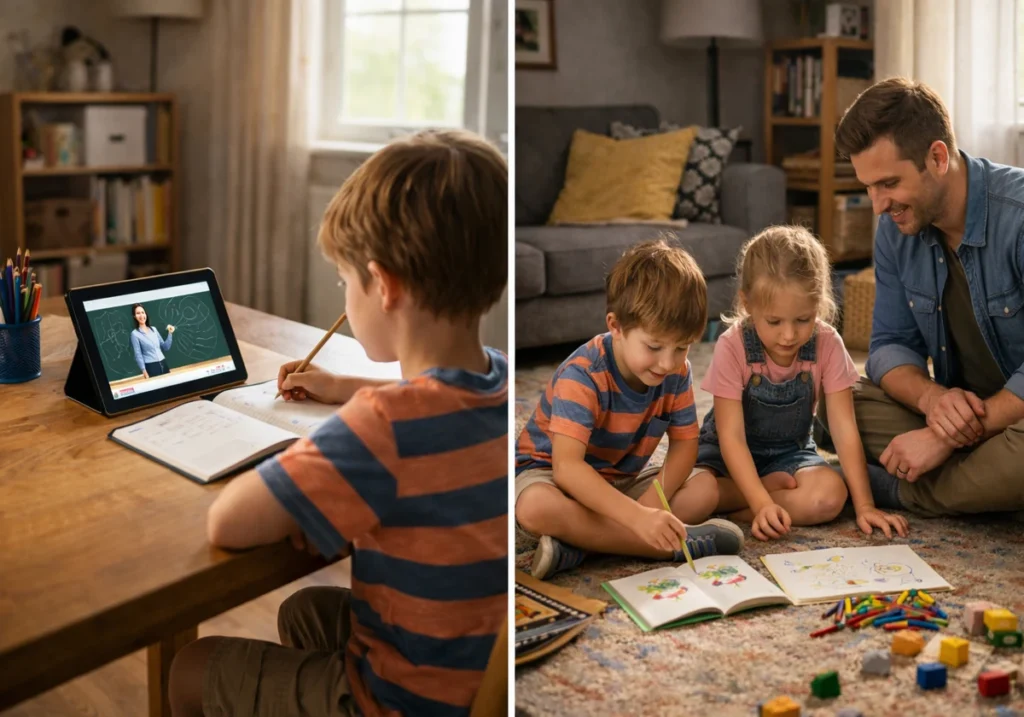
Your Kid’s World Starts With You
Screen time isn’t the enemy. But when it starts replacing real conversation, outdoor play, and family connection, kids feel that gap instantly. Besides, the research mentioned that children develop stronger mental health, better social skills, and healthier habits when screens are balanced with real-world engagement.
Small changes go a long way here. That’s why setting a screen-free hour before bed, eating meals together without tablets, or simply spending time outside as a family can shift a child’s well-being in ways no app ever could.
You know your kid better than any study does. If something feels off, trust that instinct and start with one small change today. And if you want more helpful tips on raising confident, healthy kids, explore the rest of the Littil blog. There’s a lot more worth reading.