

Parents often overlook small gaps in daily routines, like skipping breakfast or not keeping a consistent bedtime, that can affect their child’s growth. These habits may seem minor, but over time, they can affect overall development.
Your child’s daily routines can support their emotional development by giving them a sense of predictability. Since they’ll know what to expect, they can manage their feelings better and handle everyday stress without being overwhelmed.
On the flip side, missing these consistent moments leads to more power struggles and emotional outbursts.
In this article, we’ll explore further how these overlooked routine gaps can affect your child’s emotional development, behavior, and long-term skills. You’ll also find practical tips to help close those gaps and bring more balance to your family’s day.
First, let’s see how routines build habits and skills.
Build Healthy Habits and Life Skills Through Daily Routines

Daily routines can help your children build healthy habits, develop self-regulation skills, and practice time management without even noticing. Over time, these repeated actions will form the foundation for their independence and self-confidence.
Here are some ways this plays out in everyday life.
Habits That Teach Beyond Hygiene
Brushing teeth and getting dressed might seem like basic tasks to you. But for kids, these daily habits teach them consistency and personal responsibility. Each time your child finishes a task on their own, they practice finishing what they start. And that steady repetition can build independence over time.
These small rituals can also influence how children see themselves. In fact, we’ve noticed that kids who manage their own morning routines often feel more capable throughout the day. And over time, the routine becomes a natural part of their identity.
Repetition Leads to Emotional Growth
Predictable moments like bedtime talks or morning greetings can act as emotional anchors for children. They give your children a sense of safety that supports healthy emotional development.
Because your kid knows a comforting routine is coming, they’ll feel secure knowing it’ll happen every day. That steady feeling of safety can help them stay calmer when they feel upset, frustrated, or anxious. It can even help them recover faster after arguments, disappointments, or stressful moments because they know the routine will return.
This way, these anchors can strengthen their ability to manage emotions on their own.
Confidence Grows from Routine
Structured routines give children chances to make small decisions every day. This means, you can ask them to choose what to wear or pick a bedtime book to strengthen their decision-making skills. This is how they’ll learn to trust themselves since they’ve handled their own responsibilities many times before.
Core Skills Developed Daily
Every daily routine gives kids a chance to practice organizational skills, time management, and self-regulation. Getting ready for school on time, for example, teaches them to plan ahead and manage their own pace without constant reminders.
A study from the University at Albany found that children who grow up with predictable routines are less likely to struggle with time management or attention as adults. In other words, these everyday habits influence lifelong skills.
How to Create Flexible Family Routines That Stick
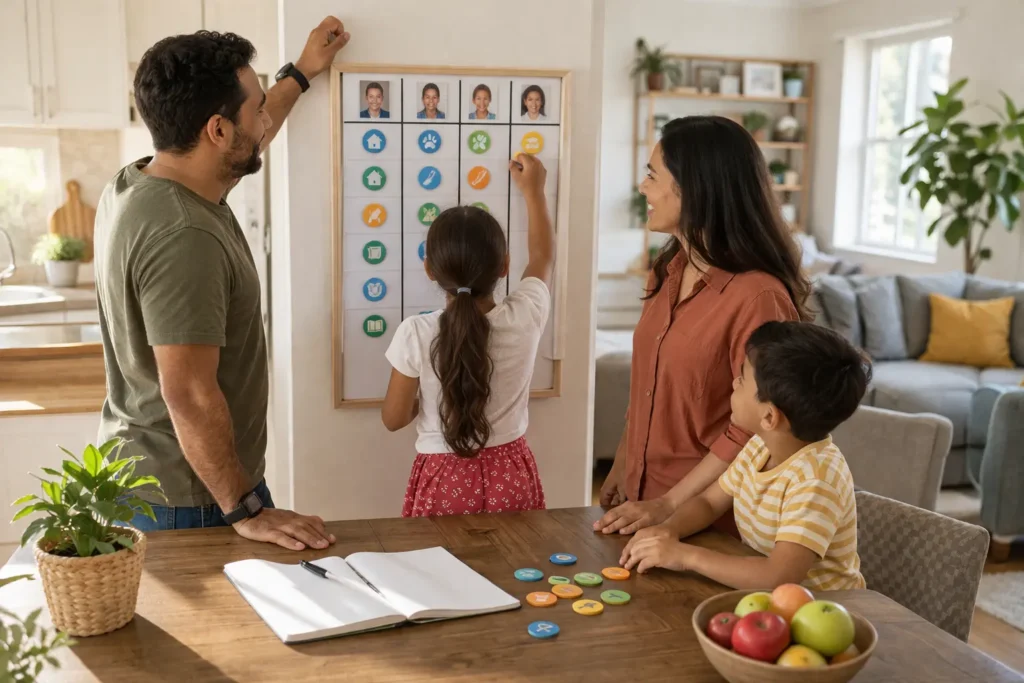
Creating routines that actually stick starts with flexibility and teamwork. The best family routines are ones your kids build, and ones that you can adjust without falling apart on busy days.
Let’s look at some practical ways to make this happen.
Make Routines With Your Child
Kids are far more likely to follow a routine that they created. If your children take part in their schedule planning, they’ll also feel responsible for their day. And that sense of responsibility will lead them to cooperate more willingly and stick to the routine consistently.
So try sitting down together and mapping out the morning or bedtime routine. Ask your child what order feels right to them. Like, do they want to brush teeth before or after putting on pajamas? You’ll notice that these small choices can greatly improve their ability to complete tasks.
Avoid Power Struggles During Transitions
Transitions, or the moments when children switch from one activity to another, are often when power struggles happen. Usually, this can be moving from screen time to dinner or from play to bedtime that often lead to arguing, stalling, or refusing to cooperate. That’s because (as we’ve made clear) kids don’t always handle sudden changes well, especially when they are deep into something they enjoy.
However, a little predictability can keep these transitions calm. We recommend using tools like visual charts, timers, and simple verbal cues to help children understand what will happen next. For instance, you can say “five more minutes until we clean up” to give them time to mentally prepare.
Let them anticipate a change. This way, the routine itself will guide them, so you don’t have to act as the enforcer.
Don’t Skip Quiet Time
We notice that quiet time is one of the most overlooked parts of a daily routine. After school, playdates, or high-energy activities, your kids need a moment to slow down. Without that pause, they often become cranky, unfocused, or emotionally reactive.
Even ten to fifteen minutes of calm activities, like reading, coloring, or having a snack, can help them reset. It’ll give their brain a break from all the stimulation. This can be especially helpful for preschool and early elementary children who get overwhelmed easily.
Aim for Consistency
Now, despite all we’ve said about routines, you don’t actually need to follow exact times every single day. After all, doing things at about the same time is often more realistic, and it works just as well. For example, dinner at 6:15 one night and 6:30 the next is close enough. What’s most important is the pattern.
Life can be unpredictable, so routines also need to be flexible. Plus, a flexible structure will give your child stability without adding pressure on you. And on days when things don’t go as planned, you can simply start fresh the next day.
Make Routines Effective Even When Parenting Isn’t Perfect

So, did any of these routine gaps feel familiar? If so, remember that many other parents are in the same situation. And most of them are doing their best while juggling a hundred other things.
The good news is that these routines are more important for how they make your child feel than how perfectly you follow them. So even imperfect routines will provide comfort and give your children a sense of predictability. That sense of security is what will benefit your children in the long run.
Don’t wait for the “perfect week” to begin. Pick one thing, like a calm bedtime ritual or sitting together at breakfast, and start today. These small steps will lead to big changes over time.
Looking for more tips on building a healthy child development routine? Check out Litill for simple, practical tools made for family life.